
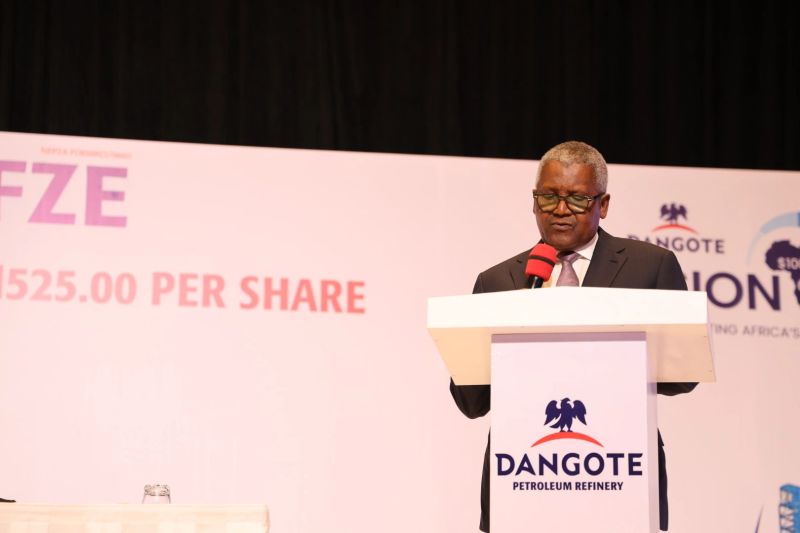
Aliko Dangote made a significant entry into East Africa’s downstream midstream segment by securing approximately 24.76% of Kenya Pipeline Company (KPC) for KES 42.5 billion (around $327 million). This transaction represents a massive play in midstream energy distribution, placing one of Africa’s most influential industrialists inside the region’s main supply artery.
Acquisition Rationale: Monetizing the Value Chain
Refineries create energy products, but distribution networks dictate market access. A mega-refinery can process thousands of barrels daily, yet without reliable access to storage hubs, inland transport lines, and discharge ports, those products risk losing margin to transport bottlenecks and port congestion.
Investing in Kenya Pipeline Company provides direct entry into the infrastructure that moves refined petroleum from Mombasa across Kenya, extending supply corridors into landlocked markets like Uganda, Rwanda, Burundi, South Sudan, and the eastern Democratic Republic of Congo. Securing physical pathways through high-volume trade routes offers long-term defensive value, creating reliable distribution channels for large-scale supply operations.
Governance Realities: Does 25% Equal Control?
Equity ownership does not automatically equal operational command. Holding a 24.76% minority interest leaves majority policy decisions with the primary owners, as the Kenyan state retains a substantial stake alongside other shareholders.
A quarter stake delivers strategic board oversight rather than unilateral control. It provides minority shareholder rights, such as veto power over major structural decisions, access to financial performance metrics, and a voice in long-term expansion plans. Operational management, daily transport schedules, and access protocols remain under independent corporate governance and state regulatory oversight.
Third-Party Access and Anti-Monopoly Protections
Energy regulators protect downstream markets by enforcing open-access rules on energy distribution networks. Kenya Pipeline Company operates under strict common-carrier regulations, meaning transport capacity must be allocated fairly across licensed oil marketing companies without favoring specific shareholders.
Own-use advantages are constrained by law. Regulators prohibit pipeline operators from granting preferential tariffs, reserved pumping slots, or priority storage access to equity partners. Dangote’s minority position cannot legally be leveraged to block competitors or bypass standard allocation rules at the Mombasa terminal.
Financing Network Expansion across East Africa
Beyond equity acquisition, expansion plans require capital allocation to increase pumping throughput, extend pipeline distances, and build out regional storage capacities.
Funding pipeline expansion generally relies on project finance backed by long-term transport contracts rather than relying solely on balance sheet capital:
- Syndicated Debt: Raising capital through international development finance institutions and local commercial banking syndicates.
- Throughput Guarantees: Utilizing “ship-or-pay” commitments with major oil distributors to secure minimum annual pipeline revenues.
- Internal Cash Flow Reinvestment: Directing dividend payouts from KPC’s existing operational revenues toward infrastructure upgrades.
ENERGY INVESTOR QUESTION™
Could ownership of Africa’s petroleum distribution infrastructure become more strategically valuable than building additional refineries?
Physical distribution assets consistently offer strong economic defensibility. Greenfield refineries require massive capital investment, carry operational exposure to global crude price volatility, and face strict environmental transition pressures.
In contrast, midstream pipelines and storage terminals operate as fee-generating infrastructure utilities. They maintain stable margins through regulated tariffs regardless of fluctuating commodity prices. As East African energy demand increases, controlling transport routes and port storage connectivity provides stable, recurring cash flows, proving that owning the distribution grid can be just as valuable as generating the product itself.