
Guarantees helped make Egyptian wind bankable. Kenya and South Africa are now trying to extend private capital to transmission, where the revenue model, the credit support and the politics are less proven.
South Africa’s first privately financed power lines will take longer to reach market than promised. On 1 October, National Treasury and the Department of Electricity and Energy moved the final request for proposals from the third quarter of 2026 to the second quarter of 2027. Their stated aim is to settle bankability before binding bids are invited.
Interest is not the obstacle. Seven consortia have prequalified, led by groups including State Grid, China Southern Power Grid, EDF and Adani Power. What remains unsettled is the commercial and credit framework, including the guarantee meant to stand behind payments to the winners.
That gap runs through African power finance. Long-term contracts and guarantees have helped draw private capital into generation. Transmission is a harder test: under availability-based models, a line earns its keep by being available, and its owner depends on a state-linked payer for decades. Egypt, Kenya and South Africa show three stages of that effort, and none has yet proved private transmission at scale.
Egypt: bankable wind, public wires
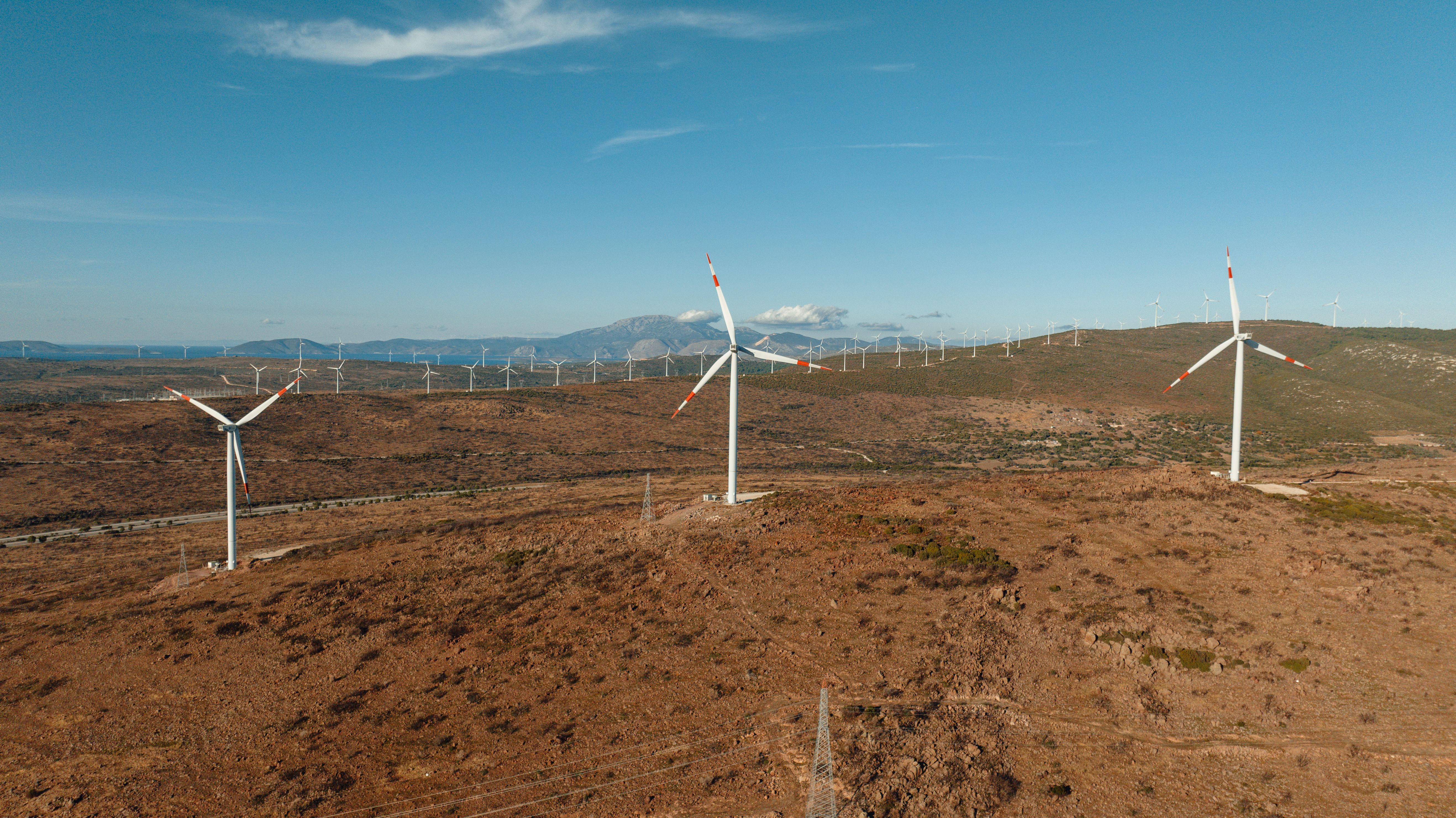
Egypt shows how far the generation model has come. On 12 June, the Multilateral Investment Guarantee Agency (MIGA) issued a $193.3 million guarantee covering ACWA Power’s equity in the 1.1 GW Suez Wind Energy project. The cover addresses breach of contract and transfer restriction and inconvertibility. It is narrower than the up to $300 million first proposed, which spanned more investors and also expropriation and war.
That guarantee sits on a layered structure. The $1.2 billion project closed with $703.6 million of senior debt from a group of lenders around the start of 2025. Its power is sold under a 25-year take-or-pay agreement with the Egyptian Electricity Transmission Company (EETC), alongside a finance ministry sovereign guarantee.
The next wave is moving more slowly than planned. ENGIE (35%), Aeolus (40%) and Orascom Construction (25%) signed a 25-year build-own-operate deal with EETC in March for 900 MW near Ras Shokeir. Financial close was expected by early in the third quarter. On 14 August, Orascom said it was still progressing towards close, and Energy Investor found no public announcement of close at the time of writing.
Contracts and insurance do not build the line. MIGA’s environmental and social review says Suez Wind’s 47 km connection is EETC’s responsibility, and that the project has “no control and only limited leverage” over it. Public money is filling that space, including a €50 million German debt swap to connect the ACWA wind farms.
The largest piece is the EU package of up to €690 million announced in June: a €600 million EIB Global loan and up to €90 million in grants. The government borrows through the Central Bank of Egypt, so this is public finance rather than private capital. The package covers 44% of the programme, which implies a total near €1.6 billion, with EETC funding the rest.
Timing is the question to press. The EIB-supported phase runs from 2027 to 2030. Suez Wind was scheduled at close for full operation by the second quarter of 2027, and Ras Shokeir is due in mid-2028. Investors should ask which grid works each wind farm depends on, and when those works will be finished.
Kenya: a signed deal, not yet a closed one
Kenya has gone further on private transmission. In December 2025, the Kenya Electricity Transmission Company (KETRACO) signed a $311 million public-private partnership with Africa50 and Power Grid Corporation of India. It covers about 180 km of 400 kV line from Lessos to Loosuk and about 72 km of 220 kV line from Kibos through Kakamega to Musaga. A project company will run the assets for 30 years, then hand them back. Africa50 calls the structure an Africa-first model and a blueprint for the continent.
The deal is described as fully privately financed, with no public funds committed. That holds for construction, but the public sector stays in the picture. KETRACO will make performance-linked availability payments once works are independently certified. Investors therefore take long-term exposure to a state-owned payer that says it can mobilise only a fraction of the $250 million a year its grid plan needs.
The parties’ public statements reviewed for this article do not set out what payment security lenders will receive. Kenya’s energy principal secretary has said the government would not commit money directly and would stand behind a robust regulatory framework. How lenders price that promise will matter beyond this project.
Kenya knows the cost of getting transmission wrong. Delays to the line serving Lake Turkana Wind Power left taxpayers with about KSh18.5 billion in deemed energy penalties. In November 2024, President William Ruto also ordered the cancellation of a $736 million transmission PPP with Adani following a US indictment of its founder.
The Africa50 deal still has to reach financial close, and Treasury was working on that in October. More may follow: six further lines worth about $550 million are at feasibility stage. KETRACO puts its long-term need at 8,000 km of lines and about $5 billion over 20 years.
South Africa: building the guarantor first
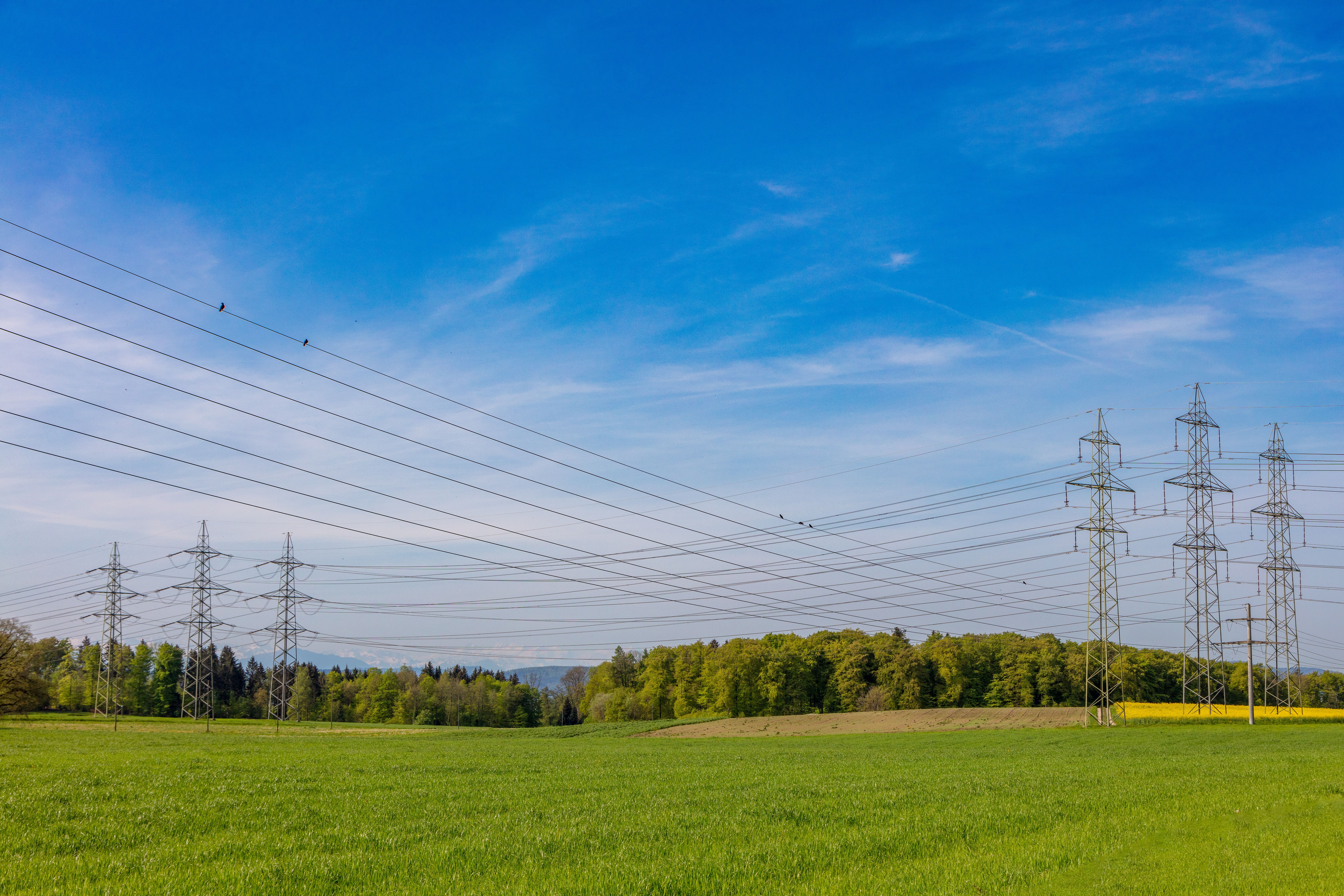
South Africa’s programme is larger but earlier. Phase I covers about 1,164 km of 400 kV lines across the Northern Cape, North West and Gauteng, with an expected investment value of about $1 billion. No binding bids have been invited, so that capital is a target rather than a commitment.
The design differs from the country’s renewable energy programme, which relied on a sovereign guarantee. Treasury sees a repeat as a contingent liability that would strain the fiscus. Its answer is a Credit Guarantee Vehicle (CGV), a privately run entity that will issue payment and termination guarantees. The plan is $500 million of initial capital, scaling to $2.5 billion, with R1.8 billion from government.
The vehicle exists, but it is not yet working. According to the October statement, it was incorporated on 12 August and has applied for a Prudential Authority licence. Investor due diligence ran until 2 October, and a binding term sheet is targeted by the end of March 2027.
Lenders want the detail. At Windaba, Standard Bank’s Vincenzia Leitich said banks are waiting to see how the claims process and its timing will work. Those mechanics will determine how much weight lenders can place on the guarantee.
| Market | Status at 2 November 2026 | Who pays | Credit support |
| Egypt | Generation privately financed; grid publicly funded | EETC buys the power | Finance ministry guarantee and MIGA cover on Suez Wind |
| Kenya | $311m PPP signed; financial close pending | KETRACO makes availability payments | Payment security not publicly detailed |
| South Africa | About $1bn in procurement; final RFP due Q2 2027 | NTCSA is the buyer | CGV being established; terms not final |
Corporate offtake is not a bypass
Selling to mines and industry can reduce reliance on a utility’s balance sheet, but it does not remove the grid. In Zambia, which adopted open access regulations in 2024, mining accounts for 229.1 MW of the 351.1 MW in registered supply agreements from two traders. Power can still reach mines through a wheeling arrangement with state utility Zesco. Market analysis still lists Zesco’s credit, currency convertibility and transmission constraints among the key risks.
Three questions for investors
- Who pays, and who backs the payer? Separate a contracted revenue stream from the credit behind it.
- Who carries the cost if the line is late? Lake Turkana shows that this risk can land far from where it began.
- What stage has the money reached? Announced, signed and closed are different things, and a programme value is not committed capital.
What to watch
- By end December 2026: South Africa’s second draft RFP package, expected with a draft CGV term sheet.
- By end March 2027: a binding CGV term sheet, ahead of the final RFP in the second quarter.
- Kenya: financial close on the Africa50 and POWERGRID project, and any disclosure of payment security.
- Egypt: financial close at Ras Shokeir, and whether EETC’s connections keep pace with new wind capacity.
Quick answers
How does a private transmission PPP work? A private project company finances, builds and operates a line for a fixed period. In Kenya’s model, the state transmission company makes availability payments linked to performance, and the assets return to it at the end.
What does a MIGA guarantee cover? It insures named political risks. On Suez Wind, the cover is on ACWA Power’s equity and addresses breach of contract and transfer restriction and inconvertibility.
Why are debt swaps used for energy in Egypt? A swap converts part of a country’s debt into local spending on agreed projects. Germany’s programme with Egypt now helps fund grid connections for wind power.