

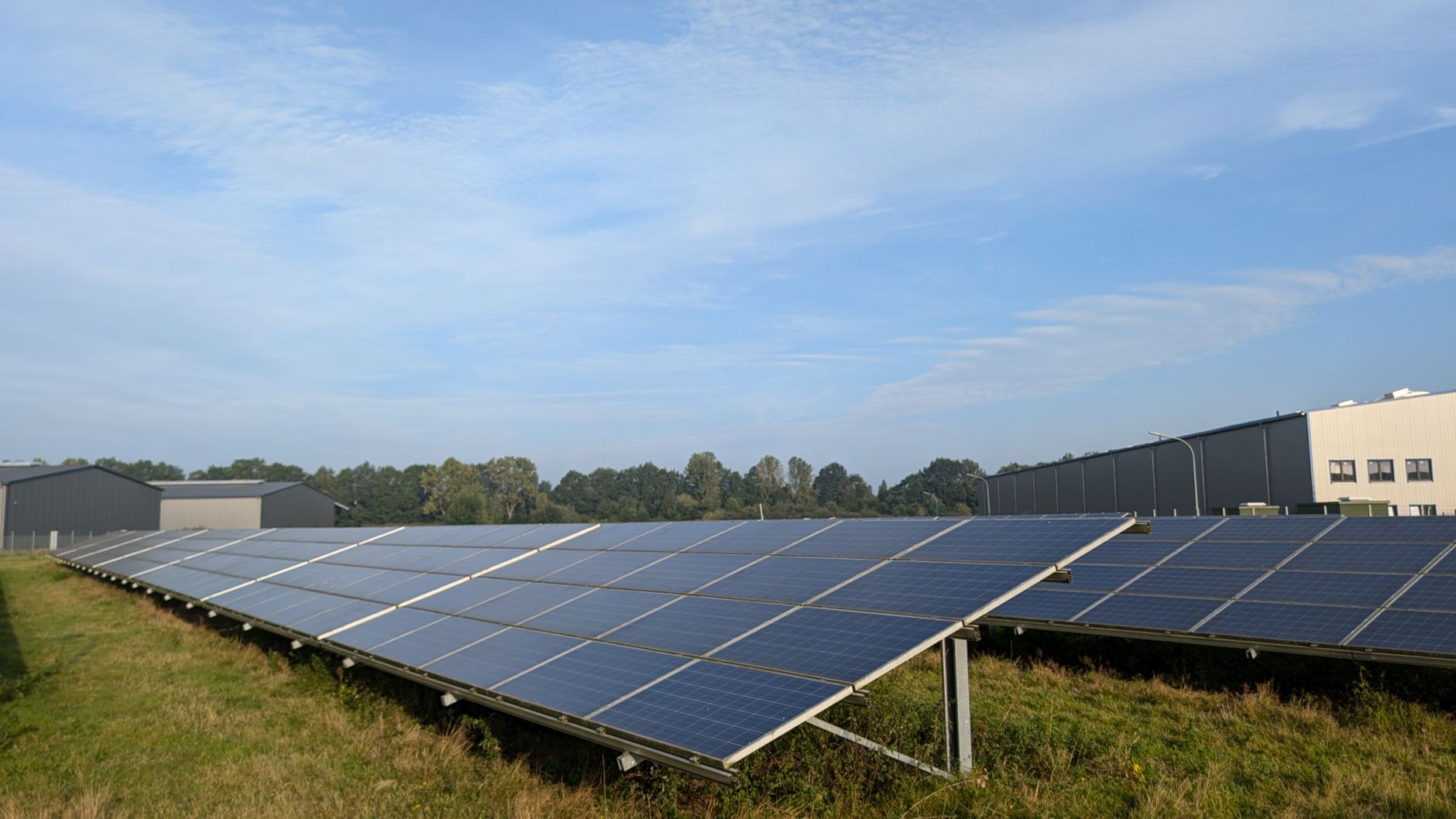
The operational 19.3 MWp Gerus solar plant illustrates how regional electricity trading could expand investment opportunities beyond conventional utility power-purchase agreements.
Namibia’s Gerus solar plant is providing an example of how renewable-energy developers can participate in Southern Africa’s emerging merchant electricity market.
Developed by Solarcentury Africa in partnership with Sino Energy, the 19.3 MWp facility has reached commercial operation and is selling electricity through the Southern African Power Pool (SAPP).
Gerus is Namibia’s first purpose-built merchant solar project to trade electricity through the regional market.
The plant’s commercial operation was reported before November 2026. Its significance today lies in the investment model rather than a new commissioning milestone.
What makes Gerus different?
Conventional utility-scale renewable-energy projects often depend on long-term power-purchase agreements with a national utility or another designated electricity buyer.
Such agreements can provide revenue visibility, helping investors and lenders evaluate whether a project will generate sufficient cash flow.
Merchant power projects use a different commercial approach.
They sell electricity into markets where prices and sales volumes may vary.
Gerus demonstrates how a solar developer can use regional electricity trading arrangements rather than relying exclusively on a conventional national utility offtake structure.
The Southern African Power Pool provides a framework for electricity trading among participating regional power systems.
This creates opportunities for generators to access demand beyond their immediate local markets, subject to trading rules and network availability.
A regional renewable-energy opportunity
The commercial relevance of cross-border electricity trading extends beyond Namibia.
Southern Africa includes countries with different generation resources, electricity-demand patterns and levels of supply reliability.
Regional trading can potentially connect generation capacity in one market with customers in another.
For renewable-energy developers, that could broaden the pool of prospective electricity buyers.
A solar project may therefore be evaluated partly on its ability to participate in a wider regional market.
However, the existence of a trading platform does not guarantee that electricity can always be sold at commercially attractive prices.
Understanding merchant power risk
Merchant projects expose investors to uncertainties that are different from those associated with fixed-price electricity contracts.
Wholesale electricity prices can fluctuate.
Revenue depends on the amount of electricity generated, market demand, the ability to trade and applicable network charges.
Transmission congestion or restrictions may limit the volume of electricity that can be delivered to buyers.
Investors must also consider trading arrangements, balancing obligations, operating costs and the financial strength of counterparties.
These factors can affect project profitability and financing terms.
A merchant project may offer greater flexibility and access to different markets, but it can also provide less predictable revenue than a long-term contracted development.
Why lenders will pay attention
Financing a renewable-energy project requires confidence that future revenues can support operating expenditure, debt repayments and investor returns.
Where electricity prices are variable, lenders may require more conservative financial assumptions or additional protections.
Developers may respond through a combination of merchant trading, bilateral electricity sales, financial hedging or other contractual arrangements where available.
The appropriate structure depends on market rules and the specific project’s circumstances.
Gerus provides a useful case study because it demonstrates that merchant solar generation can reach commercial operation in Southern Africa.
It does not, by itself, establish that the model is suitable for every country or project.
What comes next?
Solarcentury Africa has outlined ambitions to expand its merchant solar portfolio.
For investors, the most meaningful evidence will be the operating performance of existing assets, realised electricity prices, trading volumes and the financing terms achieved for additional projects.
Those measures will help determine whether merchant renewable-energy generation can develop into a scalable asset class.
The wider investment opportunity is significant: regional power markets could provide renewable-energy developers with additional routes to customers.
The challenge is ensuring that those routes support bankable and sustainable revenues.
ENERGY INVESTOR QUESTION™
Could regional electricity trading make African solar projects bankable without traditional government power-purchase agreements?

